
 By Henry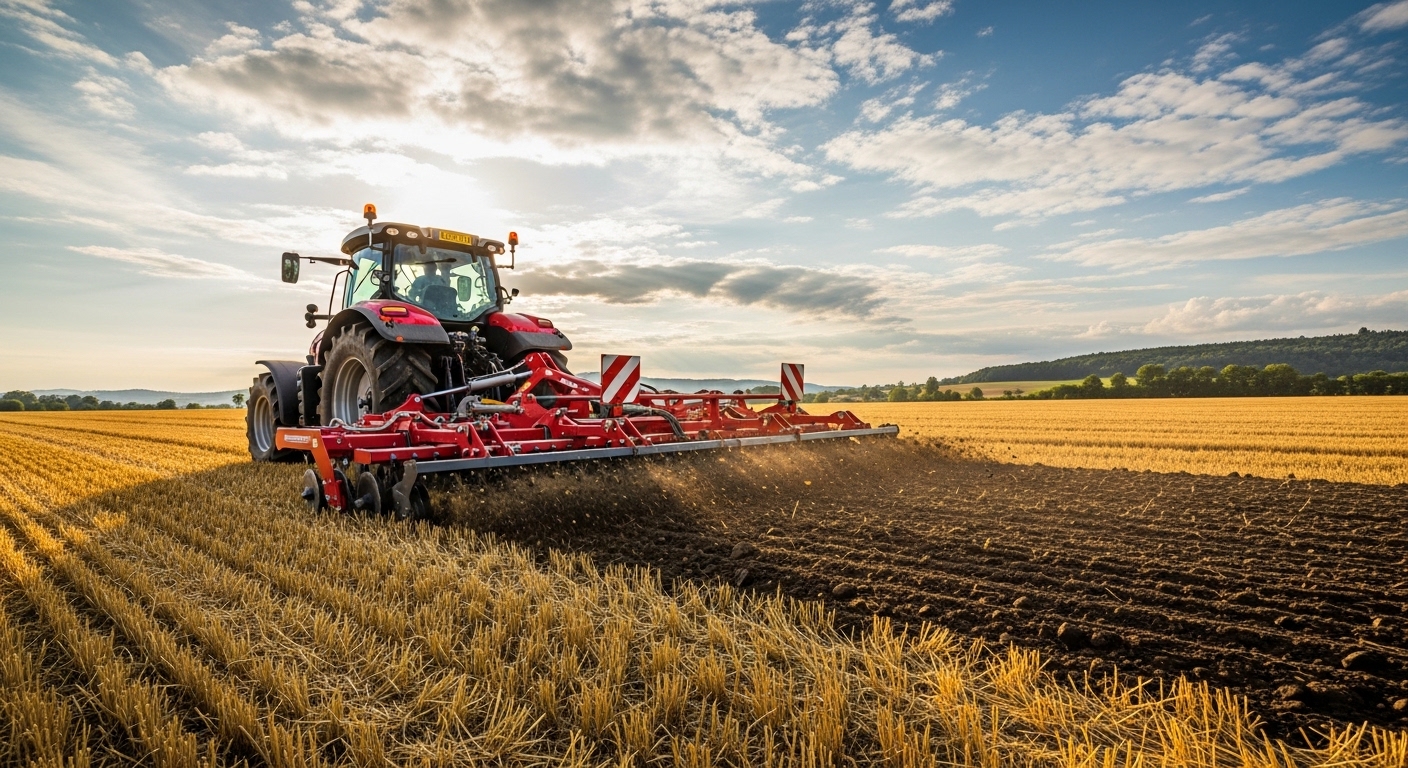
Imagine standing in your field after harvest, staring at compacted soil that’s lost its spark, wondering how to revive it without heavy plowing that strips away vital nutrients. Enter messeregge, a game-changer in precision agriculture that’s helping farmers like you build healthier ground and boost yields sustainably.
- Research shows messeregge can improve soil structure by reducing compaction, potentially increasing crop emergence by up to 20% in some cases.
- It supports nutrient cycling and microbial activity, which may lower fertilizer needs over time, though results vary by soil type.
- In regenerative farming, it aids carbon sequestration, contributing to environmental goals without sacrificing productivity.
- Evidence suggests it’s effective for organic producers, aligning with sustainable tillage practices.
- While promising, adoption depends on farm specifics; some trials indicate fuel savings from fewer passes.
What is Messeregge? Messeregge, often called a knife harrow or blade harrow, is a tool with steel blades that slice the topsoil gently. It prepares seedbeds with minimal disturbance, preserving deeper layers. Originating from German farming terms (“Messer” for knife, “Egge” for harrow), it’s ideal for modern setups.
Key Benefits: This system enhances soil health by retaining moisture and limiting erosion. For crop yield, it promotes even germination. In manure management, it mixes residues efficiently, supporting organic amendments.
Getting Started: Mount it on your tractor’s front for combined operations. Adjust depth for shallow work. Check manufacturers like Kerner for models. For more, see Kerner.
In the evolving world of farming, where every decision impacts the bottom line and the land’s future, tools that blend efficiency with sustainability stand out. Messeregge represents one such innovation, drawing from time-tested European practices to address today’s challenges like soil degradation and rising input costs. This comprehensive exploration dives into its mechanics, applications, and real-world impacts, equipping you with the knowledge to integrate it into your operations.
Messeregge is essentially a blade harrow designed for precise, shallow soil cultivation. Unlike traditional harrows that might tear up the ground, this tool uses rows of hardened steel blades to cut through the surface layer cleanly. Think of it as a surgeon’s scalpel for your fields: accurate, minimal invasive, and focused on healing rather than harm.
The design typically includes a rigid frame, adjustable depth controls, and compatibility with standard tractors. Working widths range from 2.6 to 4 meters, making it versatile for various farm sizes. In practice, it’s often front-mounted, allowing you to pair it with rear implements like seeders for one-pass efficiency.
Historical roots trace back to German agriculture, where “Messer” means knife and “Egge” means harrow. Over decades, it has evolved from basic implements to sophisticated tools integrated with GPS for precision agriculture. Today, it’s not just a tool but a system that synergizes with crop rotation and regenerative practices.
Soil is the foundation of your farm, and messeregge excels at nurturing it. By working only the top few inches, it preserves the deeper structure, which is crucial for microbial activity. These tiny organisms drive nutrient cycling, breaking down organic matter into forms plants can use.
For instance, in heavy soils, it fragments clods without pulverizing aggregates, improving aeration and water infiltration. This can lead to better moisture retention, especially in dry spells, reducing irrigation needs. Studies on similar shallow tillage tools indicate potential erosion reductions by up to 30%, as the surface remains covered with residues.
In terms of carbon sequestration, messeregge supports regenerative farming by minimizing disturbance that releases stored carbon. When combined with cover crops, it enhances soil organic matter over time, fostering a resilient ecosystem.
Bold Subheading: Real-World Impact on Microbial Life Farmers report increased earthworm populations after adopting messeregge, a sign of thriving soil biology. One European study on blade harrows showed a 15% rise in beneficial fungi, which aid in phosphorus uptake.
For organic crop producers, messeregge offers a way to maintain certification while boosting productivity. Start by assessing your soil type: it works best in loamy or clay soils but can adapt to others with adjustments.
Step one: Choose the right model. Brands like Fliegl offer durable options with optional rollers for surface firming. Mount it frontally on your tractor, set the depth to 2-4 inches, and test in a small area.
Incorporate it into your rotation: after harvest, use it to slice residues, promoting faster decomposition. This ties into manure management systems, where it mixes amendments evenly without deep incorporation.
Long-tail focus: Implementing messeregge in organic farming often involves troubleshooting initial setups, like blade alignment for even cutting. Common issues include uneven fields; solve by pre-leveling or adding packers.
No fancy tech required, but quality matters. Core components include:
- Hardened steel blades for longevity in tough soils.
- Adjustable hydraulics for depth control.
- Sturdy frames to handle tractor power.
Comparison of Popular Messeregge Models
| Manufacturer | Model | Working Width | Key Features | Approx. Cost |
|---|---|---|---|---|
| Kerner | Front Packer | 3 meters | Integrated rollers, GPS compatible | $15,000 |
| Fliegl | Agro-Center | 4 meters | Heavy-duty blades, easy maintenance | $18,000 |
| Dalandtechnik | Standard | 2.6 meters | Customizable for soil types | $12,000 |
These are field-tested, with users praising their reliability. Maintenance tip: Replace blades (ersatzmesser) every 500 acres to keep performance sharp.
One of the standout perks is cost savings. By enhancing nutrient cycling through better residue management, messeregge can cut fertilizer use. For example, in grain production, even breakdown of stalks releases locked nutrients, potentially reducing inputs by 10-20%.
Pair it with precision agriculture: GPS-guided application ensures amendments go where needed, minimizing waste. Farmers in conservation systems have seen payback in two seasons through higher yields and lower bills.
Sustainability isn’t a buzzword here; it’s measurable. Fewer passes mean less fuel consumption, dropping emissions. Shallow work limits compaction, preserving biodiversity below the surface.
In terms of carbon sequestration, it aligns with global goals. A report on sustainable tillage notes tools like this contribute to storing 0.5-1 ton of CO2 per acre annually when used in no-till hybrids.
However, balance is key: Overuse in wet conditions could lead to minor rutting, so time operations wisely.
In grain fields, messeregge shines by creating uniform seedbeds. Even emergence leads to stronger stands, resisting pests and weather. Case in point: A Midwest farmer switched to this system and reported 15% yield bumps in corn, thanks to better root development.
Synergy with crop rotation: Use it post-legumes to incorporate nitrogen-fixing residues, amplifying benefits.
Not everything goes smoothly at first. If blades clog in heavy residue, slow your speed or add a pre-chopper. For uneven cutting, check tractor alignment.
Myth bust: Is it only for large farms? No, smaller models suit market gardens, proving versatile.
Ready to try messeregge? Start small: Demo a unit from a local dealer. Monitor soil tests before and after to track improvements. Join forums for farmer insights.
3 Actionable Tips to Try Today:
- Evaluate your fields for compaction issues.
- Research compatible models for your tractor.
- Plan a trial run in the next season.
Share your thoughts below! Have you used similar tools?
What exactly is messeregge?
It’s a blade harrow for shallow soil prep, slicing rather than tearing for better health.
How does messeregge improve soil structure?
By minimizing disturbance, it preserves aggregates and boosts microbial activity.
Is messeregge suitable for organic farming?
Yes, it supports natural amendments and sustainable practices.
What equipment do I need to start?
A compatible tractor and basic model with adjustable blades.
Can messeregge reduce my fertilizer costs?
Often yes, through efficient nutrient cycling.
What’s the environmental impact?
Positive: less erosion, better carbon storage.
How to troubleshoot clogging?
Adjust speed or use in drier conditions.