
 By Henry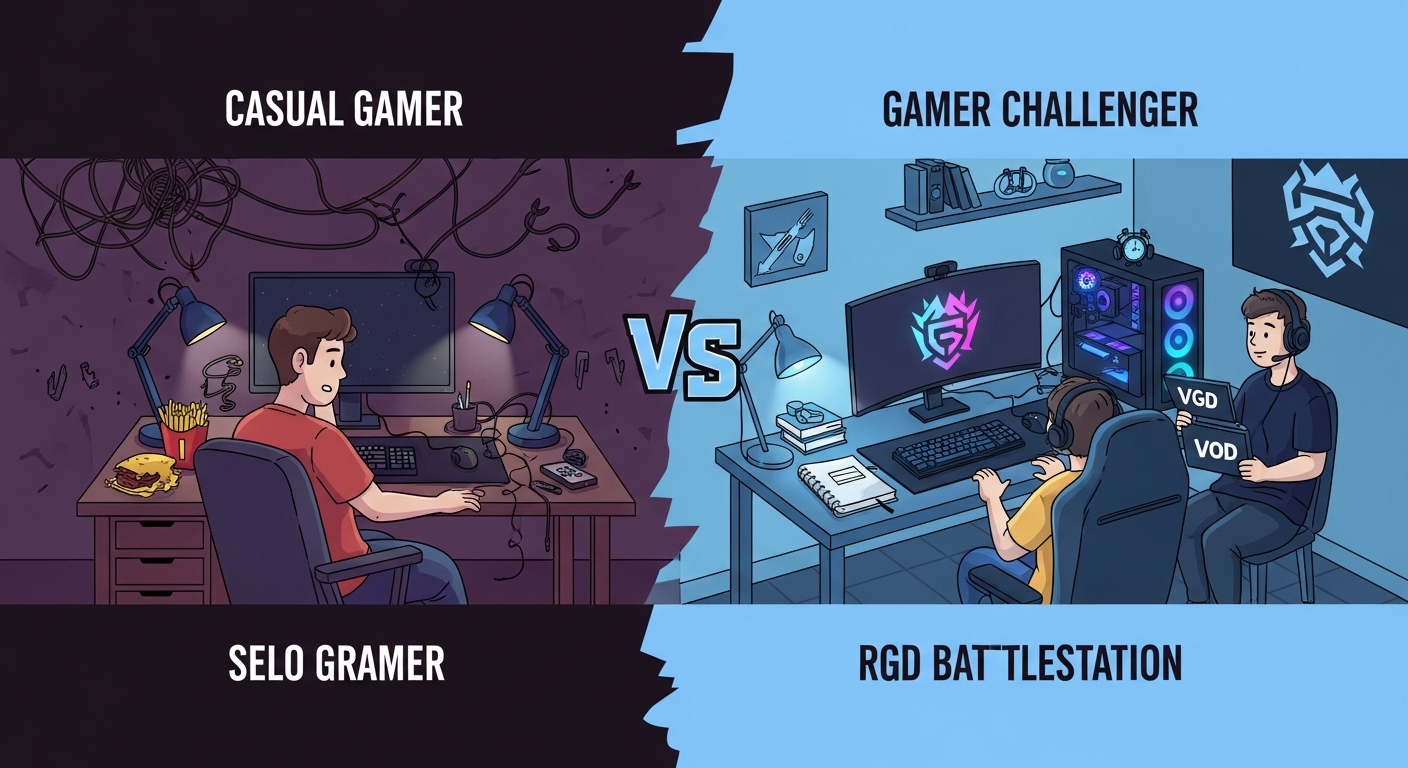
Imagine this: You are in the final moments of a ranked match. Your heart is pounding, your palms are sweating, and the entire lobby is relying on your next move. You have the raw aim, the mechanical skill, and the hours logged. Yet, something feels different. You aren’t just playing to win; you are playing to be seen. This is the moment where casual players freeze, but where a gamer challenger rises. The leap from a high-rank enthusiast to a professional esports athlete is not merely about talent. It is about a fundamental shift in identity, discipline, and strategy. If you are ready to stop being a spectator of the professional gaming circuit and start becoming a contender, this is your roadmap.
Every day, thousands of players grind the ladder. They possess incredible mechanical skills, yet they remain stuck in the endless loop of skill-based matchmaking, never breaking into the higher echelons of the industry. Why? Because raw talent is common; discipline is rare.
In the traditional sports world, a high school athlete with a great shot isn’t simply handed a professional contract. They need a coach, a training regimen, and an understanding of the business. Esports is no different. To transition from amateur to a gamer challenger, you must view yourself as an asset. You are no longer just a “player”; you are a brand, a teammate, and a student of the competitive meta.
The esports ecosystem is vast. It includes collegiate programs, amateur leagues, and the high-stakes world of the professional gaming circuit. Navigating this requires more than just a high kill-death ratio. It requires a framework.
To truly master the competitive landscape, you need a system. The gamer challenger framework is built on three pillars: Mechanical Mastery, Strategic Intelligence, and Professional Presence. Let’s break down how to implement these into your daily routine.
You likely already spend hours honing your reflexes. But a gamer challenger trains with intention. Instead of mindlessly queueing for matches, you should structure your practice.
- Deliberate Drills: Don’t just play; isolate weaknesses. If your tracking is weak, spend 30 minutes in aim trainers focusing solely on that.
- Hardware Optimization: Your gaming peripherals are your instruments. A professional musician doesn’t blame their instrument, but they ensure it is perfectly tuned. Ensure your monitor refresh rate, mouse DPI, and keyboard latency are optimized for consistency, not just flashy aesthetics.
- Replay Review: For every hour you play, spend 15 minutes reviewing your deaths. Ask yourself: Was this positioning, mechanical error, or a lack of information?
The competitive meta is the lifeblood of any esport. It shifts with patches, new strategies, and the rise of new talent. A casual player complains about the meta; a gamer challenger exploits it.
To stay ahead, you must consume the game differently.
- Study the Pros: Watch professional matches with a notebook. Do not watch for entertainment; watch to dissect rotations, resource management, and teamfight setups.
- The Scrim Mindset: If you are part of a team, treat every scrimmage like a tournament finals. Consistency in practice builds the muscle memory needed for high-pressure scenarios.
- Data Analysis: Use tools to track your stats. Understanding your win rates on specific maps or against certain compositions allows you to adapt your training to fill the gaps in your performance.
You cannot be scouted if you are invisible. Player scouting has evolved. While scouts still watch major tournaments, they also scour streaming platforms, leaderboards, and collegiate leagues.
Your goal is to make your rise undeniable.
- Stream with Intent: You don’t need a million followers. But a clean stream with a consistent schedule shows scouts that you are serious, communicative, and coachable. It serves as a living resume.
- Network: Connect with collegiate gaming organizers and other high-level players. The esports world is smaller than you think. A recommendation from a trusted coach can open doors faster than a high rank ever could.
- Communication Skills: In a professional environment, team synergy trumps individual flash. If you are toxic in ranked queues, you are building a reputation that will deter organizations from signing you.
So, you have the mindset. You have the skills. How do you actually get the jersey? The path from your gaming chair to the main stage involves understanding the infrastructure of the industry. There are several entry points into the professional gaming circuit.
Gone are the days where the only way to go pro was to move into a team house at 18. Today, esports scholarships are a legitimate pathway. Universities across the globe are investing heavily in esports programs.
Joining a collegiate team offers several advantages for the aspiring gamer challenger:
- Structured Coaching: You get access to analysts and coaches who teach structured play.
- Facilities: Access to top-tier equipment and networking.
- Competition: Regular competition against other structured teams, which is a completely different beast than ranked solo queue.
- Safety Net: You earn a degree while pursuing your dream, mitigating the risk of putting all your chips on the professional circuit.
If college isn’t your path, or you are looking to supplement it, amateur leagues are the proving grounds. This is where the gamer challenger recruitment process begins. Organizations are constantly looking for the next star, but they rarely look at the public ladder first. They look at league standings.
To get noticed:
- Form a Team: Do not rely on solo queue. Find players whose skills complement yours and whose schedules align. Establish roles clearly.
- Register for Leagues: Look for tournaments with tournament prize pools, even if they are small. Consistent performance in Tier 2 and Tier 3 events signals to Tier 1 organizations that you can handle pressure.
- The Resume: Create a player resume. Include your ranks, tournament results, VOD links, and references (like a coach or team captain). When scouts ask around, you want to be the name that comes up.
To solidify this concept, let’s look at a sample daily routine designed for someone aiming for gamer challenger status. This isn’t just about playing; it’s about holistic preparation.
| Time | Activity | Purpose |
|---|---|---|
| 10:00 AM | Physical Warm-up & Nutrition | Physical health impacts reaction time. Hydrate and stretch to prevent injury. |
| 11:00 AM | Aim Training / Mechanics Drills | Isolated skill improvement (20 mins). No distractions. |
| 12:00 PM | VOD Review (Pro Matches) | Analyze competitive meta trends. Watch specific player POVs. |
| 1:00 PM | Solo Queue (High Intensity) | Focus on individual mechanics and decision-making. Log results. |
| 3:00 PM | Team Scrims (Block 1) | Work on team synergy, communication drills, and set plays. |
| 5:00 PM | Break / Physical Exercise | Cardio to increase blood flow to the brain. Mental reset. |
| 7:00 PM | Team Scrims (Block 2) | Execute new strategies. Focus on adaptability. |
| 9:00 PM | Replay Review (Team) | Constructive criticism. Review losses without ego. |
| 10:00 PM | Streaming / Content | Build brand. Interact with community. |
| 12:00 AM | Wind Down | No screens. Sleep is critical for cognitive function. |
This structure illustrates the transition from amateur to gamer challenger. It removes the randomness of “just playing” and replaces it with intentional growth.
Understanding the business of esports is crucial for longevity. Many aspiring pros focus solely on the game, only to be taken advantage of by contracts or burned out by the schedule.
The Reality of Tournament Prize Pools:
While headlines often boast massive tournament prize pools, the reality is that for 99% of players, income is inconsistent. A gamer challenger understands financial literacy. They know that prize money is taxed, that organizations take a percentage, and that having a secondary income stream (like streaming or coaching) is often necessary until they reach the top tier.
Streaming Platforms as a Tool:
Streaming platforms are not just for entertainment; they are your portfolio. When a scout considers signing you, they will look at your stream VODs to see how you communicate, how you handle losing, and how you interact with teammates. A stream that showcases high-level gameplay with a positive, analytical attitude is worth more than a highlight reel.
The road to becoming a gamer challenger is lonely and exhausting. Burnout is the number one killer of promising careers. To maintain peak performance, you must treat your mental health with the same rigor as your mechanics.
- Growth Mindset: Losses are not failures; they are data. If you lose a match that would have qualified you for a major tournament, it hurts. But the gamer challenger mentality uses that pain to fuel the next training block. They ask, “What did I learn?” not “Whose fault was it?”
- Physical Health: Sitting for 12 hours a day deteriorates the body. Wrist stretches, back posture, and regular exercise are non-negotiable. Carpal tunnel syndrome ends careers.
- Support Systems: Surround yourself with people who understand the goal. If your friends pressure you to play casual games when you need to be scrimming, you have to make the hard choice. Your inner circle should lift you up, not distract you from your purpose.
If you are serious about this path, here is your actionable checklist to begin the gamer challenger recruitment process today.
- Audit Your Gear: Ensure your gaming peripherals are professional grade and consistent. You don’t need the most expensive gear, but you need reliable gear.
- Clean Your Reputation: Google yourself. Review your chat logs. Ensure that if an organization looks you up, they find a professional.
- Join a League: Stop only playing ranked. Find an amateur league for your game. Experience in organized play is the only way to develop team synergy.
- Create a Training Schedule: Stop playing on impulse. Use the blueprint above to create a weekly schedule.
- Network with Collegiate Gaming Organizers: Even if you aren’t in school, attend collegiate events or local LANs. These organizers often have connections to scouts and sponsors.
While the principles apply universally, some titles have more established ecosystems for the aspiring pro. If you are wondering about the best games for gamer challenger status, look for titles with:
- Developer Support: Games that have long-term roadmaps and active balance patches.
- Structured Leagues: Games like League of Legends, Valorant, *Counter-Strike 2*, Rocket League, and Fortnite have robust Tier 2 and Tier 3 scenes.
- Collegiate Presence: Titles featured in major collegiate esports organizations (like the NACE or College Valorant) offer clear paths via esports scholarships.
The difference between a dreamer and a gamer challenger is not the height of their ambition; it is the depth of their preparation. The professional gaming circuit is a ruthless meritocracy, but it is also a place where dedication is rewarded. By shifting your focus from individual glory to team synergy, from casual grinding to structured competitive meta analysis, and from anonymity to a professional brand, you transform yourself from a talented amateur into a sought-after competitor.
The esports ecosystem is hungry for the next generation of talent. But it will not come to your bedroom door. You have to step into the arena. Whether you aim for esports scholarships to build your foundation or you dive headfirst into the amateur leagues to climb the ranks, the blueprint is in your hands.
Start today. Stop playing like a fan and start training like a contender. The next time you queue up, remember: you aren’t just playing a game. You are auditioning for your future.
Your Next Move:
Join a local tournament this week. Not next month. This week. Experience the pressure of organized play. Document what you learn, and use it to refine your gamer challenger training routine.
You May Also Like: R6 Marketplace: Buy & Sell Rare Skins Safely
Q: What exactly defines a “gamer challenger” compared to a regular competitive player?
A: A gamer challenger is a player who has moved beyond simply grinding ranked matches. They actively engage with the esports ecosystem by participating in organized leagues, maintaining a professional brand, following a structured training routine, and actively seeking player scouting opportunities. It is the mindset of treating gaming as a professional career path rather than just a hobby.
Q: How important are esports scholarships for breaking into the pro scene?
A: Extremely important for many players. Esports scholarships offer a structured environment with coaching, facilities, and guaranteed competition. They serve as a modern “farm system” for the professional gaming circuit, allowing you to develop team synergy and gain exposure while earning a degree, which provides a safety net.
Q: I have a high rank, but I keep getting ignored by teams. Why?
A: High rank indicates mechanical skill, but teams scout for team synergy and coachability. If you are ignoring the gamer challenger recruitment process, you remain invisible. You need to join amateur leagues, network with collegiate gaming organizers, and build a portfolio (streams, VODs, resumes) that shows you can function within a structured team environment.
Q: What equipment do I absolutely need to upgrade first?
A: Focus on consistency. A high-refresh-rate monitor (144Hz or higher) and a reliable mouse with a consistent sensor are the most critical gaming peripherals. A good microphone is also essential for communication and streaming, as clear comms are vital for team synergy.
Q: Can I balance streaming on platforms like Twitch with trying to go pro?
A: Yes, but you must prioritize. Streaming can be a powerful tool for player scouting as it showcases your personality and skill. However, ensure your streaming schedule does not interfere with your gamer challenger training routine or scrim blocks. Treat streaming as a supplement to your training, not the main focus, until you have secured a professional contract.
Q: What are the best games to pursue if I want to find a team easily?
A: The best games for gamer challenger status are typically those with large, active Tier 2 scenes and collegiate support. Currently, Valorant, League of Legends, *Counter-Strike 2*, and Rocket League offer the most structured paths from amateur leagues to professional contracts, with frequent tournaments and active player scouting networks.
Q: How do I handle the financial instability of pursuing pro gaming?
A: Financial management is a key part of the gamer challenger mindset. Aim to secure esports scholarships or part-time work to support your grind. Focus on reaching a level where you can consistently place in tournament prize pools or secure a stipend from an organization. Treat your early career as an investment, and never rely solely on the hope of a big win to sustain you.