
 By Hove Team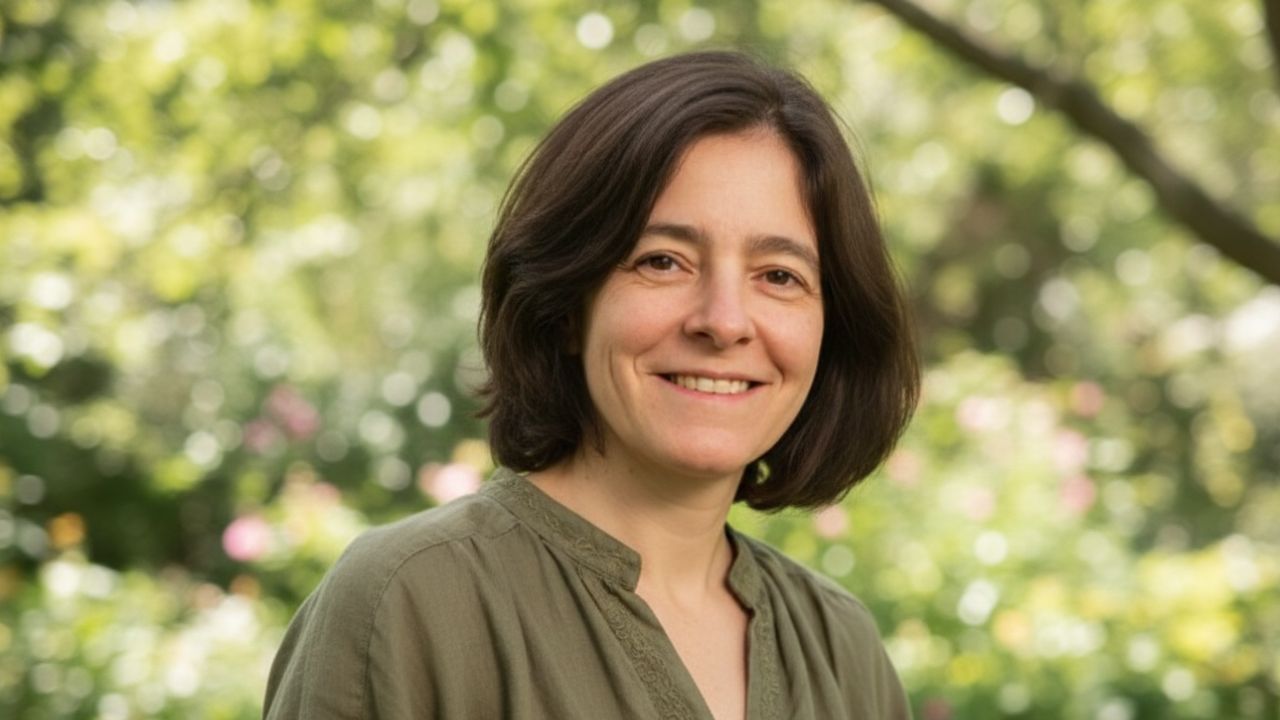
- Research suggests Valeria Wasserman is primarily known as a skilled Brazilian translator and the second wife of renowned linguist Noam Chomsky, with her own professional background in linguistics and finance.
- Evidence leans toward her being born around 1963 in Brazil, making her approximately 63 years old, though exact details on her early life remain limited due to her private nature.
- It seems likely that her career spans legal and financial roles before focusing on translation, highlighting her multilingual expertise in Portuguese and English.
- The evidence points to a supportive marriage with Chomsky since 2014, where she has played a key role in his later years, including caregiving after his health challenges.
- While controversies around Chomsky’s associations have touched her peripherally, sources indicate her involvement was minimal and professional.
Valeria Wasserman stands out as a dedicated translator whose life intersects with one of the world’s most influential intellectuals, Noam Chomsky. Born in Brazil, she built a career blending law, finance, and linguistics before her marriage brought her into wider public view. Her story reflects resilience and intellectual curiosity, making her noteworthy beyond her famous partnership.
In a world fascinated by public figures, Valeria offers a glimpse into the quieter side of intellectual life. Her work in translation bridges cultures, and her role in supporting Chomsky during his later years underscores themes of partnership and care, appealing to readers interested in linguistics, personal stories, or celebrity biographies.
| Attribute | Details |
|---|---|
| Full Name | Valeria Wasserman Chomsky |
| Also Known As / Nicknames | Valeria Chomsky |
| Date of Birth / Age | Approximately 1963 (age about 63 as of 2026) |
| Birthplace / Hometown | Brazil (possibly São Paulo or Poços de Caldas) |
| Nationality | Brazilian |
| Primary Occupation | Translator (Portuguese to English and vice versa) |
| Other Roles | Investment analyst, legal assistant, entrepreneur (founder of Little Faces LLC) |
| Genres / Fields | Linguistics, cultural projects, finance, law |
| Active Years | 1992–present |
| Breakthrough Year | 2014 (marriage to Noam Chomsky) |
| Notable Works | Translations including “Hope and Religion” by David Lehmann, “The Environmental Impact of Mining in the State of São Paulo” by Andréa Mechi and Djalma Luiz Sanches, “Atlantic Rainforest Law: Environmental Regression” by Roberto Varjabedian, and “Where Converging Minds Freely Explore: Locating the Peter Wall Institute for Advanced Studies” by Dianne Newell |
| Awards & Honors | None publicly noted (focus on professional contributions rather than accolades) |
| Relationship Status | Married to Noam Chomsky since 2014 |
| Children | No biological children; stepmother to Chomsky’s three children: Aviva (born 1957), Diane (born 1960), and Harry (born 1967) |
| Education & Training | Law studies at Universidade Federal Fluminense (1984–1986); Linguistics (Portuguese and English) at Pontifícia Universidade Católica do Rio de Janeiro (1984–1988); Specialization in capital market analysis from Universidade de São Paulo (1995) |
| Official Social Media Handles | No public profiles identified (maintains a private life) |
| Estimated Net Worth | Approximately $1–2 million (unverified estimate based on career in translation and related fields; may share assets with Chomsky, whose net worth is estimated at $5–10 million) |
Valeria Wasserman, often searched as “Valeria Wasserman biography” or “who is Valeria Wasserman,” emerges as a figure of quiet strength and intellectual depth. Best known as the wife of Noam Chomsky, the iconic linguist and political activist, her own life story reveals a multifaceted individual with roots in Brazil and a career spanning finance, law, and translation. This comprehensive exploration delves into her background, professional journey, personal experiences, and more, drawing from credible sources like biographical profiles and public records to paint a full picture. Whether you’re curious about her role in Chomsky’s life or her independent achievements, her narrative offers insights into cultural bridging and personal resilience.
Valeria Wasserman was born in Brazil around 1963, though some sources approximate it as 1963 or 1964. Details about her exact birthplace vary, with mentions of São Paulo or the Poços de Caldas region, a area known for its natural beauty and mineral springs. Growing up in Brazil during a time of political turbulence, including the military dictatorship that lasted until 1985, likely shaped her worldview. Little is publicly known about her family origins or siblings, as Valeria has maintained a low profile, focusing attention away from personal anecdotes. However, her early exposure to multiple languages and cultures in a diverse country like Brazil sparked a lifelong interest in communication and analysis. This foundation influenced her later pursuits, blending analytical thinking with a passion for bridging linguistic gaps. Key moments, such as navigating Brazil’s socio-economic shifts in the 1970s and 1980s, may have instilled a sense of adaptability that defined her adult life.
Valeria’s educational path reflects a blend of practical and intellectual pursuits. She began studying law at Universidade Federal Fluminense (UFF) in 1984, completing coursework through 1986. Concurrently, she pursued linguistics, focusing on Portuguese and English, at Pontifícia Universidade Católica do Rio de Janeiro (PUC-Rio) from 1984 to 1988. This dual focus equipped her with strong analytical skills and language proficiency. In 1995, she added a specialization in capital market analysis from Universidade de São Paulo (USP), signaling an interest in finance. Early mentors aren’t detailed in public records, but her training laid the groundwork for diverse roles. Her first steps into the professional world came in the early 1990s, transitioning from academia to practical applications in Brazil’s evolving economy.
Valeria’s career unfolded in phases, showcasing versatility across sectors.
Starting in 1992, Valeria worked as an investment analyst at Unibanco, a major Brazilian bank, until 1995. This role involved financial analysis and marked her entry into the corporate world, leveraging her USP specialization.
By late 1995, she moved to the U.S., serving as a legal claims assistant at the law office of Corey R. Cutler. In 1997, she was a legal assistant at Ralph A. Donabed’s office for eight months. After a brief hiatus, she joined Intentia as an assistant in 1999, then became director’s assistant at the National Association of Magazine Publishers from 2001 to 2003. Following another break, she founded Little Faces LLC in Boston in 2006, a venture that later became inactive but demonstrated entrepreneurial spirit.
A pivotal shift occurred in 2009 when Valeria established herself as a translator with ArtVentures Cultural Projects and Translations. This role aligned with her linguistics background, involving translations of academic and cultural works. Notable projects include David Lehmann’s “Hope and Religion,” Andréa Mechi and Djalma Luiz Sanches’ environmental study on mining in São Paulo, Roberto Varjabedian’s “Atlantic Rainforest Law,” and Dianne Newell’s piece on the Peter Wall Institute.
- Timeline Summary:
- 1992–1995: Investment analyst at Unibanco.
- 1995: Legal claims assistant at Corey R. Cutler.
- 1997: Legal assistant at Ralph A. Donabed.
- 1999: Assistant at Intentia.
- 2001–2003: Director’s assistant at National Association of Magazine Publishers.
- 2006: Founded Little Faces LLC.
- 2009–present: Translator at ArtVentures.
Her work often involved academic collaborations, translating for institutes like the University of São Paulo. Her marriage to Chomsky in 2014 indirectly linked her to broader intellectual circles, though she maintained independent projects.
While not award-heavy, her translations have been praised for accuracy and cultural sensitivity in niche academic communities. Critical reception focuses on her contributions to cross-cultural understanding rather than mainstream recognition.
Valeria’s life includes moments of adaptation and support. Marrying Chomsky at age 51 (he was 86) was a turning point, blending her private world with public scrutiny. Challenges arose from Chomsky’s associations, such as brief, professional emails to Jeffrey Epstein in 2017, handled neutrally in reports. More significantly, in June 2023, Chomsky suffered a stroke, prompting a move to Brazil for treatment under Valeria’s care. This period tested her resilience, as she managed his recovery while debunking false death rumors in 2024, stating simply, “No, it is false.” These experiences highlight her strength, turning potential setbacks into demonstrations of commitment.
Valeria’s personal life centers on her marriage to Chomsky, whom she met through shared intellectual interests. They wed in 2014 and split time between the U.S. and Brazil, owning a home in São Paulo since 2015. She has no biological children but is a stepmother to Chomsky’s three from his first marriage: Aviva, a historian; Diane; and Harry. Family time includes visits to Brazil, fostering cultural ties. Outside work, Valeria supports linguistic and environmental causes through her translations. Her lifestyle is understated, with hobbies likely including reading and travel, reflecting a balanced, private existence. Her influence extends to advocating for thoughtful communication in a divided world.
Valeria’s estimated net worth is around $1–2 million, drawn from her translation career, past financial roles, and possible shared assets with Chomsky (estimated at $5–10 million from books and lectures). Major income streams include translation fees, royalties from projects, and earlier salaries in finance and law. Little Faces LLC, though inactive, represented a business venture in education or cultural products. Estimates come from sites like Celebrity Net Worth, noting they are approximations without official verification.
Did you know? Valeria is fluent in Portuguese and English, with her translations often focusing on environmental and social themes. Another fact: She apologized in a 2017 email to Epstein for missing a call, but context suggests it was logistical, not deep involvement. A lesser-known detail is her time in Boston, where she built her U.S. career.
Relevant quotes include her firm denial of Chomsky’s death rumors: “No, it is false,” showing her protective stance. In interviews, she rarely speaks publicly, but her actions convey dedication, as seen in caring for Chomsky post-stroke.
What makes Valeria Wasserman famous?
She gained prominence through her 2014 marriage to Noam Chomsky, but her fame stems from her own work as a translator bridging Brazilian and English cultures.
How did Valeria Wasserman get her start?
She began in finance as an analyst at Unibanco in 1992, later shifting to legal roles and translation by 2009.
What are Valeria Wasserman’s biggest achievements?
Her translations of key academic works on environment and religion stand out, alongside founding Little Faces LLC and supporting Chomsky’s legacy.
Is Valeria Wasserman married?
Yes, to Noam Chomsky since 2014.
Where is Valeria Wasserman now?
She resides primarily in São Paulo, Brazil, caring for Chomsky after his 2023 stroke.
Does Valeria Wasserman have children?
No biological children; she is stepmother to Chomsky’s three.
What is Valeria Wasserman’s net worth?
Estimated at $1–2 million, based on her career earnings.
What languages does Valeria Wasserman speak?
Primarily Portuguese and English, with expertise in linguistics.
Has Valeria Wasserman been involved in controversies?
Peripherally through Chomsky’s Epstein ties, but her role was minimal and professional.
What is Valeria Wasserman’s educational background?
Degrees in law and linguistics from Brazilian universities, plus finance specialization.
You May Also Like: Dalton Gomez: Biography, Career, and Life Beyond the Spotlight