
 By Henry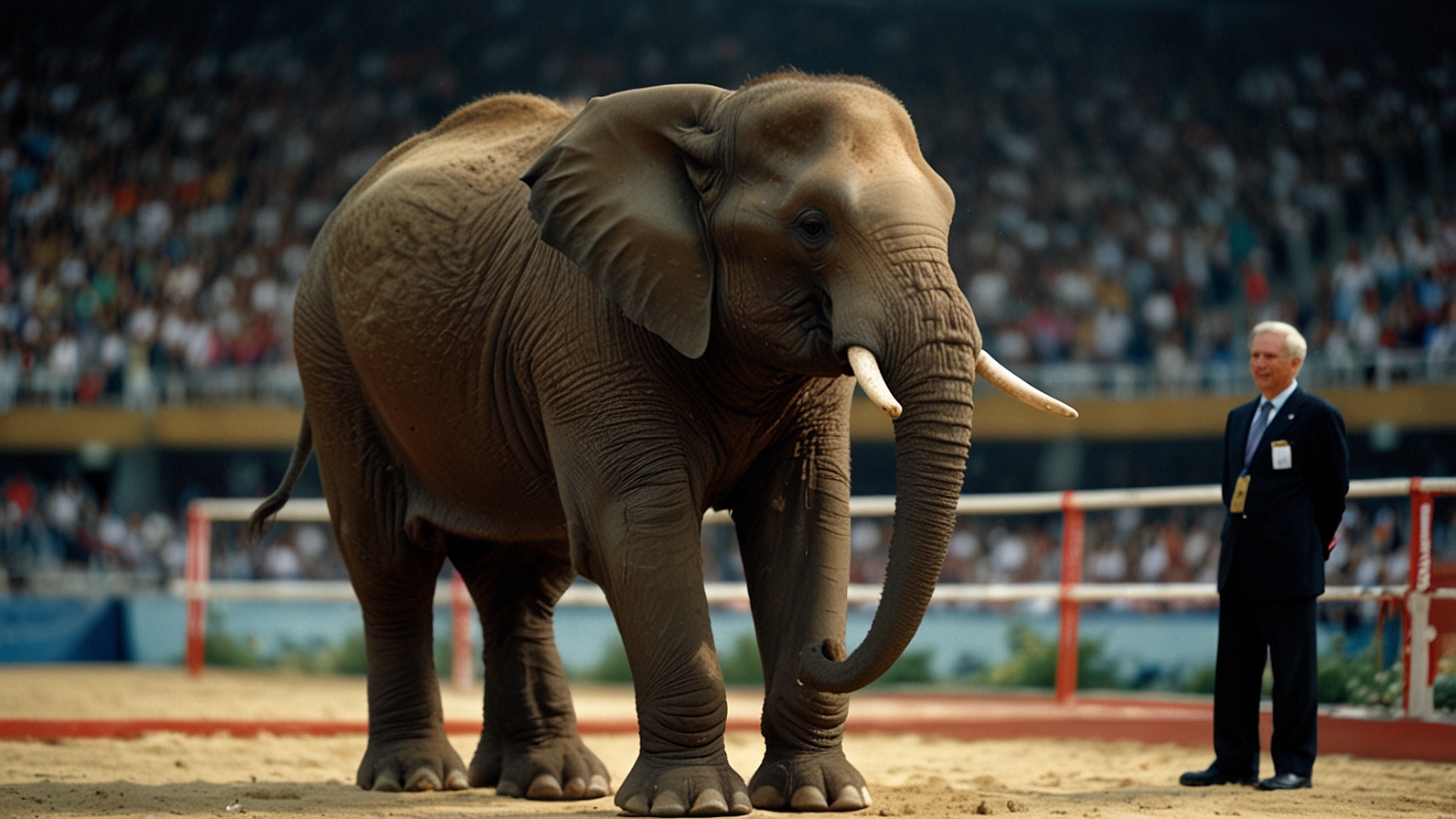
Have you ever wondered what truly separates those who dream from those who stand on the Olympic podium? We watch them on screen, medals gleaming, national anthems swelling, and we see only the triumph. We don’t see the 4 a.m. training sessions in empty gymnasiums. We don’t feel the sting of injuries that threaten to end everything. And we certainly don’t understand what it means to carry the weight of a nation’s expectations during a era of political tension.
The flying elephant memoirs of an olympic champion offers us that missing piece of the puzzle. This is not your typical sports biography filled with recycled statistics and predictable victory laps. Instead, it is a raw, intimate journey through the life of Alexander Savin, the Soviet volleyball legend whose story transcends athletics to become something far more profound: a meditation on what it means to rise when the world expects you to stay grounded.
Before we dive into the pages themselves, let’s sit with that title for a moment. The Flying Elephant. It stops you, doesn’t it? Elephants don’t fly. They are creatures of earth and memory, strength and steady presence. And that is precisely the point.
The memoir’s title works on two beautiful levels. On one hand, it captures the sheer improbability of Savin’s journey. Here was an athlete competing during the golden age of Soviet volleyball, a period when the stakes extended far beyond personal glory. Every spike, every block, every point carried the weight of Cold War rivalries and national pride. To soar in such an environment required something almost magical.
On the other hand, the elephant represents something deeply personal. In many cultures, elephants symbolize emotional memory, enduring strength, and cultural identity. Savin weaves these qualities throughout his narrative, showing us that his greatest asset wasn’t his vertical jump or his powerful swing. It was his ability to remember where he came from, to draw strength from his roots, and to carry his cultural identity with pride even as he represented a vast, complex nation on the world stage.
The “flying” element, then, becomes the universal human aspiration. We all want to break limitations. We all want to defy the stereotypes others place upon us. We all want to rise above adversity. Savin’s memoir simply shows us what that looks like when the stakes are Olympic gold.
Every oak tree was once a nut that held its ground. Alexander Savin’s early life reads less like the opening chapter of a champion’s story and more like a testament to the power of ordinary beginnings. Raised in modest circumstances, he faced challenges that would have derailed a less determined spirit: limited access to training facilities, financial struggles that made equipment a luxury, and early competition failures that could have convinced anyone to pursue an easier path.
What makes this section of the memoir so compelling is Savin’s refusal to romanticize struggle. He doesn’t pretend that poverty builds character or that every setback was a blessing in disguise. Instead, he shows us the messy reality: the frustration of wanting to train harder but lacking resources, the quiet tears after losses that stung for weeks, the moments of doubt when walking away seemed like the sensible choice.
Yet something kept him going. The memoir points to family support as the invisible scaffolding that held everything together. His parents didn’t have money to offer, but they gave something perhaps more valuable: belief. They saw something in their son that the world had not yet recognized, and they nurtured that spark until it became a flame.
Here is where the flying elephant memoirs of an olympic champion distinguishes itself from lesser sports autobiographies. Savin understood early that physical talent is common. What separates Olympic gold medalists from everyone else is what happens between the ears.
The book walks us through the gradual development of what we would today call sports psychology, though Savin likely didn’t have that language at the time. He describes learning to visualize success before it happened, to compartmentalize doubt during critical moments, and to treat failure not as judgment but as feedback. These lessons came not from textbooks but from experience, from the school of hard knocks that every serious athlete attends.
For readers fascinated by Cold War athletics, this memoir offers a rare glimpse behind the Iron Curtain. The Soviet sports system was legendary and, to Western observers, mysterious. Savin pulls back the curtain without bitterness or propaganda, showing us both the strengths and the profound human costs of that system.
Training at CSKA Moscow, the legendary sports club of the Soviet military, demanded everything. Days began before dawn and ended long after sunset. The facilities were world-class, but so were the expectations. Athletes were not just representing themselves; they were carrying the ideological weight of a superpower locked in a global struggle for hearts and minds.
Yet Savin’s portrayal avoids easy caricature. He introduces us to coaches who genuinely cared, teammates who became brothers, and moments of genuine camaraderie that transcended political systems. The humanity of those experiences shines through, reminding us that even within rigid structures, the human spirit finds ways to connect and flourish.
One of the most poignant threads running through the memoir is Savin’s determination to honor teammates and competitors who have been unjustly forgotten by history. He paints vivid portraits of the men who shaped the golden era of volleyball, ensuring their names and contributions are not lost to time.
This generosity of spirit reveals something essential about the author. He understands that individual glory is built on collective effort. The spike that wins the match is set up by a perfect pass. The championship is won by a team, not a solo act. By lifting up those who stood alongside him, Savin demonstrates the humility that true greatness requires.
When the moment finally arrived, when Savin stood on the Olympic podium with gold around his neck, what did he feel? The memoir answers this question in ways that surprised me.
He describes the national anthem playing, the flag rising, the crowd roaring. But instead of pure elation, he felt something more complex: validation mixed with an almost overwhelming sense of responsibility. He was not just celebrating personal victory. He was carrying the hopes of coaches who had believed in him, family members who had sacrificed for him, and a nation that had invested its faith in his abilities.
The gold medal, Savin reflects, was never really the point. It was a symbol, a tangible representation of something invisible: years of discipline, countless small choices to keep going, the accumulated wisdom of every failure that had preceded this success. The medal itself would tarnish over time. The journey that produced it would remain forever bright.
What happens after the cheering stops? This question haunts many Olympians, and Savin addresses it with characteristic honesty. The transition from elite athlete to whatever comes next is rarely smooth. The structure that defined your life disappears. The identity you built around your sport must be rebuilt.
Savin found his path forward through coaching and mentorship. He discovered that the lessons he had learned on the court could transform young athletes just beginning their journeys. The same wisdom that had guided him through grueling training sessions now helped him guide others through their own struggles.
The flying elephant memoirs of an olympic champion devotes significant attention to this post-competition phase, and it is some of the most valuable material in the book. For anyone who has ever wondered what happens to champions after the spotlight moves on, Savin provides an answer: they find new ways to fly.
If this memoir has a central thesis, it is this: greatness is built, not born. Savin repeatedly emphasizes that natural ability means nothing without the discipline to develop it, the resilience to sustain it, and the character to wield it wisely. His story serves as powerful evidence that the most important qualities for success are available to anyone willing to cultivate them.
Long before sports psychology became mainstream, Savin understood that victory happens first in the mind. The memoir is filled with examples of mental preparation, from visualization techniques to strategies for managing pressure during competition. These insights will fascinate not only athletes but anyone who faces high-stakes situations in their own life.
Throughout the book, Savin embraces his background as a source of pride and motivation. He never tries to escape who he is or where he came from. Instead, he draws power from those roots, allowing them to anchor him when the winds of competition blow hardest. In an era when many feel pressure to assimilate and conform, this message resonates beyond the world of sports.
Perhaps most importantly, the memoir explores what it means to build a legacy that outlasts medals. Savin’s commitment to mentorship, to preserving the memory of forgotten legends, and to sharing his hard-won wisdom with future generations demonstrates that the truest champions are those who lift others as they rise.
For readers who appreciate seeing history come alive, this memoir delivers something special. The Kindle edition includes over 240 rare photographs drawn from private family collections and public archives -5. These images span five decades of volleyball history, offering unprecedented visual access to training camps, Olympic competitions, championship matches, and intimate moments with legendary players.
The photographs do more than illustrate the text. They transport you. You see the intensity in young Savin’s eyes before a big match. You feel the exhaustion after grueling training. You witness the joy of victory shared with teammates who have become family. This visual dimension transforms the reading experience from informative to immersive.
The flying elephant memoirs of an olympic champion casts a wide net. It will obviously appeal to volleyball players and coaches at all levels, who will find in its pages a master class in dedication, teamwork, and the pursuit of excellence. But the book’s reach extends far beyond the volleyball community.
Sports history enthusiasts will treasure the insider’s view of Cold War athletics, a world that has largely disappeared. Olympic Games aficionados will appreciate the detailed accounts of competition at the highest level. Readers of inspirational biographies will find themselves moved by a story that earns every emotional payoff through honest storytelling rather than cheap sentiment.
Perhaps most surprisingly, students of Cold War cultural history will discover valuable material here. The memoir illuminates how sports functioned as a proxy battlefield during those tense decades, and how individual athletes navigated the intersection of personal ambition and national expectation.
Even readers with no particular interest in sports will find themselves drawn into Savin’s world. His struggles with self-doubt, his relationships with mentors and teammates, his search for meaning beyond achievement, these are universal human experiences. The volleyball court is simply the stage where his particular drama unfolded.
For those considering the flying elephant memoirs of an olympic champion kindle edition review, a few practical notes. The digital version preserves all 240 photographs, though viewing them on a standard e-ink Kindle may not do them justice. Consider reading on a tablet or phone where the images can be appreciated in full detail.
The file size is substantial (68.8 MB) due to the photographic content, so ensure you have adequate storage and a stable internet connection for downloading. Word Wise is enabled, making the book accessible to readers who may appreciate occasional vocabulary support. Print length clocks in at 514 pages, offering substantial depth without feeling padded.
As I turned the final pages of this memoir, I found myself reflecting on what I would carry forward. Let me share a few of the lessons that have stayed with me:
Believe in your impossible. The things that seem most out of reach are often the goals most worth pursuing. Savin’s journey reminds us that today’s impossibility can become tomorrow’s reality with enough dedication.
Consistency outperforms intensity. Short bursts of motivation produce short bursts of results. Real achievement comes from showing up day after day, doing the work whether you feel like it or not. The champion is not the one who trains hardest on their best days but the one who trains on their worst days.
Failure is feedback, not finality. Every setback contains information about what needs to improve. Savin’s willingness to learn from losses rather than be defined by them allowed him to grow continually throughout his career.
True champions uplift others. The measure of greatness is not what you achieve for yourself but what you make possible for others. Savin’s commitment to mentoring the next generation, to preserving the memory of forgotten legends, to sharing his wisdom freely, these choices reveal the kind of champion he truly became.
The flying elephant memoirs of an olympic champion is not merely a book about winning medals. It is a book about winning battles within oneself. It is about the quiet courage required to keep going when every instinct screams stop. It is about the paradoxical truth that the heaviest feet can learn to fly.
The metaphor of the flying elephant reminds us that circumstances need not determine destiny. Grounded though we may be by background, by expectation, by our own doubts, we retain the capacity to rise. Alexander Savin’s life demonstrates this truth. His memoir preserves it for the rest of us.
Whether you come to this book as a volleyball enthusiast, a student of Olympic history, or simply a human being in need of inspiration, you will find what you are looking for. Just be prepared to encounter something unexpected along the way: a champion willing to show you not only his medals but his scars, not only his victories but his struggles, not only his flight but the weight he carried to achieve it.
You May Also Like: Equestrian Paralympics 2024 2024: Full Results and Highlights
Who is the author of The Flying Elephant memoirs?
The memoir is written by Alexander Savin, the legendary Soviet volleyball player who won Olympic gold in 1980 and was one of the most dominant players of his era. The book is co-created with contributions from family members and collaborators who helped bring his story to English-speaking audiences.
What sport does the Olympic champion in this memoir compete in?
Alexander Savin competed in volleyball. He was a key member of the Soviet national team during its golden age and later became a respected coach and mentor.
Does this memoir focus only on sports, or does it cover personal life too?
The memoir balances both beautifully. While it provides detailed coverage of Savin’s athletic career, including training regimens and competition strategies, it also delves deeply into his personal relationships, his cultural identity, his struggles with self-doubt, and his search for meaning beyond athletic achievement.
Is this book suitable for readers who don’t follow volleyball?
Absolutely. While volleyball enthusiasts will appreciate the sport-specific content, the book’s themes of perseverance, resilience, identity, and purpose are universal. Many readers who have no particular interest in sports have found themselves moved by Savin’s story.
How does the memoir address Cold War history?
The book provides valuable insight into the Soviet sports system during the Cold War era, including the pressures and expectations placed on athletes who were seen as representatives of their nation’s ideology. Savin offers an insider’s perspective without descending into propaganda or bitterness.
Are there photographs included in the book?
Yes, the Kindle edition includes over 240 rare photographs from private family collections and public archives, spanning five decades of volleyball history. These images add significant visual depth to the written narrative.
Where can I buy The Flying Elephant memoirs of an Olympic champion?
The book is available through major online retailers including Amazon, where the Kindle edition can be purchased. Given its publication date of October 2025, availability may expand to additional platforms over time.