
 By Henry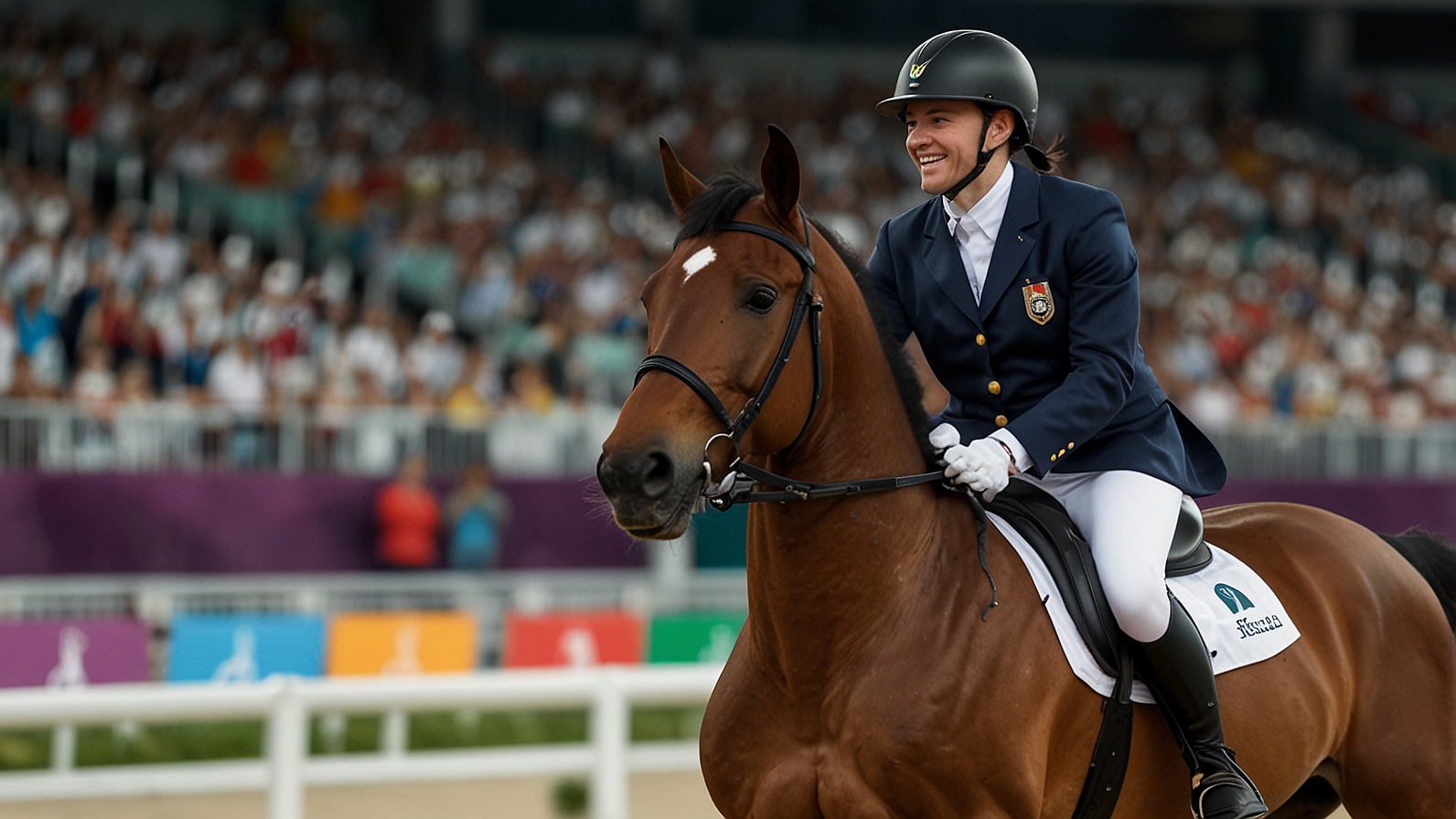
Have you ever witnessed a partnership so profound that it defies gravity, where human spirit and equine grace merge into something truly magical? At the equestrian paralympics 2024 2024, held against the breathtaking backdrop of the Palace of Versailles, para-equestrian athletes showcased just that, turning challenges into triumphs and proving that true excellence knows no bounds.
Para-equestrian, the elegant discipline of dressage adapted for athletes with impairments, isn’t just a sport; it’s a testament to resilience and harmony. Imagine riders guiding their horses through intricate patterns, each movement a story of trust and precision. For fans of the Paralympic Games, this event highlights the beauty of inclusive sports, drawing in para-equestrian athletes, horse breeding enthusiasts, and disability advocates alike. It’s where technical mastery meets emotional depth, reminding us all why the bond between horse and rider is legendary.
In 2024, the competition spanned five thrilling days from September 3 to 7, featuring 11 events across individual, team, and freestyle tests. With 76 athletes from 30 countries, the stage was set for history-making moments. Think of it as a symphony, where every trot and pirouette echoes the athletes’ journeys of overcoming adversity.
To appreciate the equestrian paralympics 2024 2024, you need to grasp the classification system, which ensures fair play by grouping athletes based on their impairments. Grades I through V reflect varying levels of physical or visual challenges, with Grade I for the most severe impairments and Grade V for milder ones.
- Grade I: Riders with severe impairments affecting all limbs and trunk, often using wheelchairs. Tests focus on walk movements.
- Grade II: Involves severe impairments in the trunk and moderate in the limbs, emphasizing walk and trot.
- Grade III: Covers impairments in two limbs or moderate in all four, including trot and canter.
- Grade IV: Milder impairments in one or two limbs, or visual impairments, with full dressage elements.
- Grade V: The least severe, often with minimal limb impairments or visual issues, performing advanced movements.
This system, governed by the FEI Para-Equestrian rules, levels the playing field, allowing each athlete’s skills to shine. For newcomers, it’s like customizing a puzzle so every piece fits perfectly, highlighting strengths over limitations.
The equestrian paralympics 2024 2024 overflowed with inspirational stories. Take Rebecca Hart from the USA, a veteran in her fifth Games, who finally claimed individual gold in Grade III with her mare Floratina, scoring a personal best of 77.900%. Her journey, marked by perseverance after years of near-misses, culminated in triple golds: individual, team, and freestyle. “This is the dream I’ve chased for 25 years,” she shared, her voice filled with emotion.
Then there’s Fiona Howard, a 25-year-old debutante, who dominated Grade II on Diamond Dunes with an unprecedented 80.000% score, the highest across all grades. Her flawless routines to music from Avatar earned her three golds, proving that newcomers can redefine excellence. Roxanne Trunnell, now the most decorated U.S. para-equestrian with 10 medals, added silvers and golds in Grade I on Fan Tastico H, a partnership formed just months before the Games.
On the international front, Latvia’s Rihards Snikus made history with his country’s first Paralympic gold in Grade I, scoring 79.167%. Belgium’s Michèle George, a six-time gold medalist, added two more in Grade V on Best of 8, her seventh overall. These performances weren’t just about scores; they were about grit, like George’s battle with a rare condition, turning pain into poetry on horseback.
Germany’s Regine Mispelkamp earned silver and bronze in Grade V, while the Netherlands’ Demi Haerkens dazzled in Grade IV freestyle with 83.840%. Each story underscores the emotional storytelling of the sport, where athletes’ journeys inspire fans and advocates alike.
Diving into the details, the equestrian paralympics 2024 2024 delivered edge-of-your-seat competitions. Here’s a breakdown of key results across events:
- Grade I: Gold – Rihards Snikus (LAT, 79.167%), Silver – Roxanne Trunnell (USA, 78.000%), Bronze – Sara Morganti (ITA, 77.833%).
- Grade II: Gold – Fiona Howard (USA, 80.000%), Silver – Katrine Kristensen (DEN, 76.233%), Bronze – Georgia Wilson (GBR, 75.900%).
- Grade III: Gold – Rebecca Hart (USA, 77.900%), Silver – Rixt van der Horst (NED, 76.567%), Bronze – Lotte Krijnsen (NED, 75.233%).
- Grade IV: Gold – Demi Haerkens (NED, 78.216%), Silver – Kate Shoemaker (USA, 76.567%), Bronze – Sanne Voets (NED, 75.900%).
- Grade V: Gold – Michèle George (BEL, 78.000%), Silver – Regine Mispelkamp (GER, 76.833%), Bronze – Kevin Staut (FRA, 75.567%).
The USA made history with their first team gold, scoring a record 235.567%. Netherlands took silver (232.850%), and Germany bronze (223.751%).
- Grade I: Gold – Rihards Snikus (LAT, 82.500%), Silver – Sara Morganti (ITA, 81.000%), Bronze – Roxanne Trunnell (USA, 80.500%).
- Grade II: Gold – Fiona Howard (USA, 81.994%), Silver – Georgia Wilson (GBR, 79.374%), Bronze – Katrine Kristensen (DEN, 78.500%).
- Grade III: Gold – Rebecca Hart (USA, 83.534%), Silver – Rixt van der Horst (NED, 81.000%), Bronze – Lotte Krijnsen (NED, 80.000%).
- Grade IV: Gold – Demi Haerkens (NED, 83.840%), Silver – Anna-Lena Niehues (GER, 80.900%), Bronze – Kate Shoemaker (USA, 80.170%).
- Grade V: Gold – Michèle George (BEL, 82.500%), Silver – Regine Mispelkamp (GER, 81.000%), Bronze – Sophie Wells (GBR, 80.000%).
For a visual snapshot, check this medal table:
| Rank | Country | Gold | Silver | Bronze | Total |
|---|---|---|---|---|---|
| 1 | USA | 5 | 1 | 1 | 7 |
| 2 | Netherlands | 2 | 4 | 0 | 6 |
| 3 | Belgium | 2 | 0 | 0 | 2 |
| 3 | Latvia | 2 | 0 | 0 | 2 |
| 4 | Germany | 0 | 3 | 3 | 6 |
| 5 | Great Britain | 0 | 1 | 6 | 7 |
| 6 | Italy | 0 | 1 | 1 | 2 |
These results, from official Paralympic sources, paint a picture of dominance by the USA, with emerging stars from smaller nations adding excitement.
At the heart of para-dressage championships lies the profound partnership between athlete and horse. Picture Floratina, Rebecca Hart’s Hanoverian mare, who has competed in both able-bodied and para events, earning golds in multiple championships. Or Diamond Dunes, Fiona Howard’s stallion, whose sensitivity amplifies her commands, turning subtle cues into seamless dances.
This bond goes beyond competition; it’s therapeutic. Horses like Fan Tastico H adapt to riders’ needs, providing stability and confidence. In the Palace of Versailles venue, these pairs evoked fairy tales, with riders crediting their mounts for turning dreams into reality. As one athlete noted, “The horse doesn’t see disability; it sees a partner.”
Horse welfare in Paralympics took center stage in 2024, with the FEI’s “Be a Guardian” initiative reframing care as holistic. For the first time, an Equine Welfare Coordinator, Dr. Richard Corde, oversaw operations, ensuring transport, accommodation, and veterinary support met top standards.
Recommendations from the French National Assembly, including well-ventilated stables and weather protocols, aligned with global efforts. No major incidents occurred, proving that prioritizing welfare enhances performance. It’s like nurturing a fine instrument; the better the care, the sweeter the music.
Adaptive riding equipment levels the arena for para-equestrian athletes. From specialized saddles with handholds for stability to rainbow reins for better grip, these tools compensate for impairments without compromising safety.
Common items include:
- Ladder Reins: Joined loops for easier handling.
- Five-Point Harnesses: Secure riders in carriages or saddles.
- Therapeutic Pads: Fleece bareback pads for comfort.
- Back Supports: Braces for posture.
Approved by the International Equestrian Federation, these aids, like custom loops for contact, empower riders. Think of them as extensions of the body, turning potential barriers into bridges.
The history of equestrian paralympics traces back to the 1970s as therapeutic riding in Scandinavia and Britain. It debuted at the 1984 Paralympics in New York but became a staple in 1996 Atlanta, with 15 competitors from six nations.
By Sydney 2000, stars like Britain’s Lee Pearson emerged, dominating with multiple golds. The FEI took over in 2006, expanding to mixed events. Today, it’s the second-largest equestrian event globally, evolving from leisure to elite sport, inspiring inclusive growth.
The best moments of equestrian paralympics 2024 2024 included the USA’s record team score, Snikus’ historic win for Latvia, and George’s emotional seventh gold. Freestyles to movie soundtracks, like Hart’s Driving Miss Daisy routine at 83.534%, captivated audiences.
Social media buzzed with highlights: Howard’s perfect 80%, Trunnell’s quick partnership success. These instants, blending elegance and emotion, defined the Games.
The schedule kicked off with individual tests on September 3, team on September 6, and freestyles on September 7. Results favored innovation and heart, with the USA leading the Paralympic equestrian medal table.
For who won gold in equestrian paralympics 2024 2024, see the tables above; standouts like Hart and Howard shone brightest.
Missed the action? Relive it easily. YouTube channels like Paralympic Games offer day-by-day compilations, such as “Para Equestrian Highlights | Day 9.” Peacock streams full events, while NBC Olympics provides clips.
Search for “Paris 2024 Para Equestrian” on these platforms for freestyle finals and athlete spotlights. It’s like having Versailles in your living room.
As the curtains close on the equestrian paralympics 2024 2024, we’re left with lessons in partnership and perseverance. These athletes remind us that barriers are merely stepping stones. Next steps? Dive deeper: Follow FEI Para-Equestrian updates, support local adaptive programs, or attend a para-dressage event. Share your favorite moment below; let’s keep the conversation alive!
What are the classification grades in equestrian paralympics 2024 2024?
Grades I-V group athletes by impairment severity, ensuring fair competition in para-dressage.
Who won gold in equestrian paralympics 2024 2024 team event?
The USA claimed historic gold with a record score of 235.567%, ahead of Netherlands and Germany.
How does horse welfare factor into the Paralympics?
Initiatives like “Be a Guardian” prioritize care, with coordinators ensuring optimal conditions for horses.
What adaptive riding equipment is used in para-equestrian?
Items like ladder reins, handholds, and harnesses help compensate for impairments, approved by FEI.
What’s the history of equestrian paralympics?
It began as therapy in the 1970s, debuting at Paralympics in 1996, and has grown into a global discipline.
How to watch equestrian paralympics 2024 2024 highlights?
Check YouTube for Paralympic Games clips or stream on Peacock for full replays.
What were the best moments of equestrian paralympics 2024 2024?
Highlights include USA’s triple golds, Latvia’s first medal, and freestyles scoring over 83%.