
 By Henry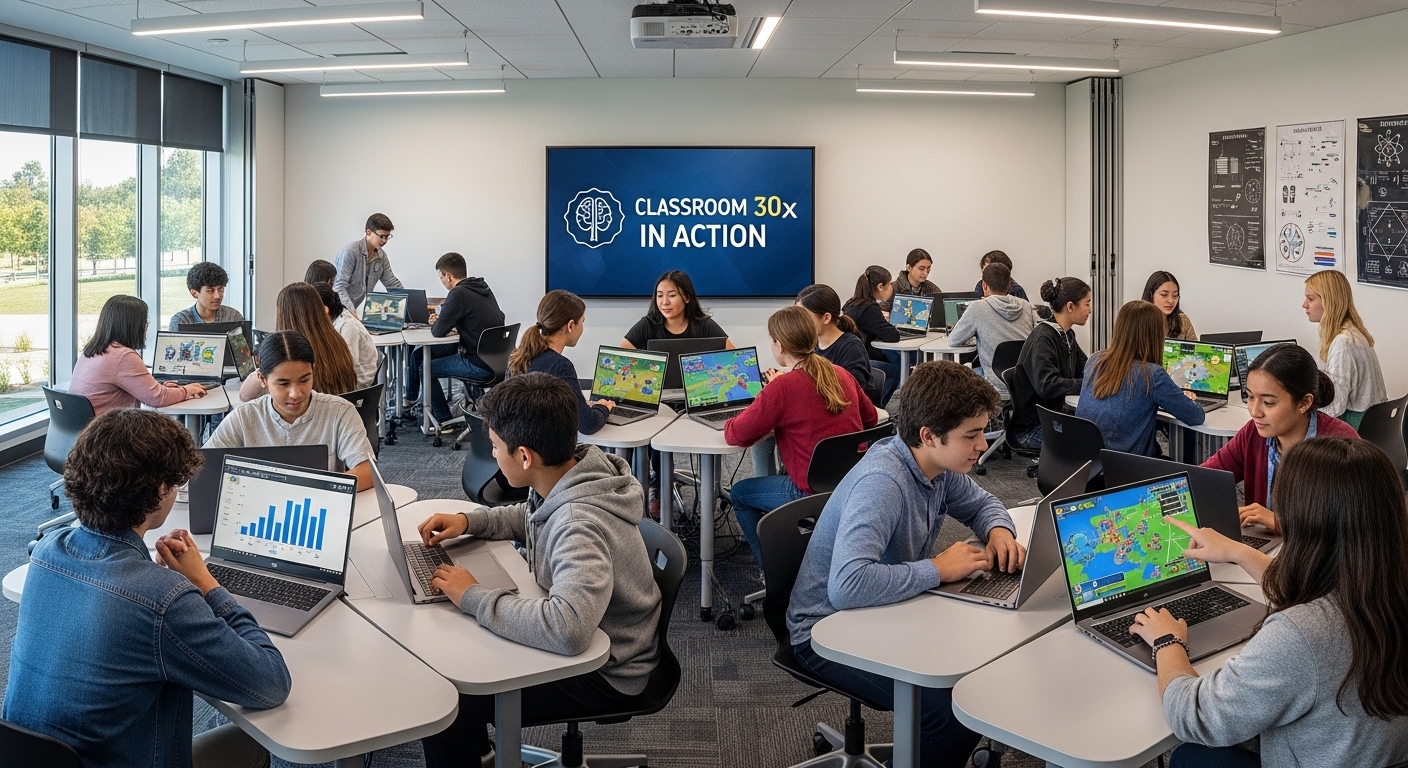
- Classroom 30x is a free, web-based platform: It offers gamified educational games and activities designed to boost student engagement in K-12 settings, accessible without sign-ups or downloads.
- Key benefits include higher engagement and retention: Research suggests it can increase student participation by up to 93 percent and improve knowledge retention by 60 percent compared to traditional methods, though results may vary by implementation.
- It uses adaptive AI for personalization: The platform adjusts difficulty levels in real time based on student performance, making it inclusive for diverse learners, but some educators note the need for careful monitoring to ensure balanced use.
- Accessibility is a strong suit: No installations required, compatible with school devices, and features like screen readers support students with disabilities, promoting equitable access amid debates on digital divides.
- Potential drawbacks to consider: While innovative, it may not suit all subjects equally, and over-reliance on tech could raise privacy concerns, so integration should be thoughtful and balanced with offline activities.
Understanding the Platform: Classroom 30x stands out as an educational gamification tool that transforms standard lessons into interactive experiences. For example, students might learn fractions through a virtual pizza shop simulation, applying concepts in a fun, practical way. This approach addresses common challenges like student disengagement, especially in resource-limited schools. Visit sites like outrightsystems.org for more on its browser-based access.
Why It Matters for Educators: In today’s classrooms, keeping students focused can be tough with distractions everywhere. Classroom 30x provides student engagement strategies through adaptive learning algorithms and virtual learning environments. Teachers get real-time student analytics via dashboards, helping tailor instruction. However, it’s wise to combine it with traditional methods for a well-rounded curriculum, as some studies highlight the value of hybrid approaches.
Getting Started: Implementing Classroom 30x is straightforward: open a browser, select a game aligned with your lesson, and dive in. It’s ideal for K-12 EdTech solutions, with no costs involved. For tutorials on the teacher dashboard, check resources from lasermagazine.co.uk. Remember, start small to gauge its fit for your group.
Imagine a classroom where students eagerly tackle math problems because they’re unlocking levels in an adventure quest, or where science concepts come alive through virtual experiments that feel like real-life discoveries. This isn’t a distant dream: it’s the reality offered by Classroom 30x, a innovative platform shaking up how we approach education. In a world where student disengagement is a growing concern, with many kids zoning out during traditional lectures, Classroom 30x steps in with its gamified, accessible tools to reignite that spark of curiosity.
At its core, Classroom 30x is a free, web-based platform that delivers interactive teaching aids through browser games and simulations. You don’t need to worry about complicated setups, no passwords or hefty downloads here. It runs smoothly on school PCs, Chromebooks, iPads, or even mobiles, making it a go-to for environments with limited resources. The platform indexes open-source games from places like GitHub, ensuring a wide variety of free-to-play options that load quickly, even on older devices. It bypasses firewalls common in schools, so access remains unblocked and hassle-free.
For instance, think of a busy teacher juggling multiple classes: with Classroom 30x, you can quickly pull up a game during transitions or as a reward, without gathering materials or dealing with tech glitches. This simplicity aligns perfectly with the demands of modern classroom management, where time and budgets are often stretched thin.
What sets Classroom 30x apart are its educational gamification elements, like badges, leaderboards, quests, and points systems that reward progress. These turn routine lessons into engaging challenges. Adaptive learning algorithms analyze student performance in real time, adjusting difficulty to match individual needs: easier tasks for those struggling, tougher ones for advanced learners. This AI-driven personalization ensures no one gets left behind or bored.
Virtual learning environments include immersive educational simulations, such as virtual labs for chemistry or physics, where students conduct experiments without physical supplies. Interactive games cover subjects like math, science, language arts, history, and STEM. Examples abound: Run 3 hones timing and reflexes while teaching logic; 2048 builds pattern recognition; Slope improves coordination; or Subway Surfers 1v1 turns puzzle-solving into a competitive race. For collaboration, games like 1v1 LOL encourage teamwork in group challenges.
Teachers love the dashboard for real-time student analytics, tracking progress and spotting areas for improvement. Accessibility features shine too, with screen readers, closed captions, keyboard navigation, and low-data requirements for inclusive learning. No personal data collection means privacy stays intact, complying with safety guidelines.
The platform’s growing library caters to various grades. For math and science, try virtual pizza shops where kids master fractions by slicing pies, or bridge-building challenges that teach engineering principles. History buffs can role-play events, while language arts games involve storytelling quests. These aren’t just distractions: they’re tied to curriculum goals, fostering critical thinking and creativity.
Switching to Classroom 30x can transform learning outcomes. Studies indicate it boosts engagement by up to 93 percent during class time, with 60 percent higher retention rates than traditional methods. Active learning reduces failure rates by 55 percent, and 74 percent of teachers report increased participation. For students, it enhances cognitive skills, attention spans, and collaboration: a quick 5-minute game break can improve task accuracy by 8 to 14 percent and group work by 22 percent.
Teachers gain efficiency through data-driven insights, allowing them to refine strategies and focus on mentoring. In one US school case study, test scores rose by 20 percent after integrating virtual simulations. It’s especially helpful for STEM learning platforms, where hands-on experiences build real-world skills without costly equipment. However, for the best results, balance it with offline activities to avoid screen fatigue.
Traditional classrooms often rely on lectures and textbooks, which can lead to passive learning and lower motivation. Classroom 30x flips this with dynamic, participatory sessions that provide instant feedback and adapt to needs. Outcomes in interactive settings are 70 percent better, with reduced dropout rates.
Here’s a comparison table based on educational models:
| Feature | Traditional Methods | Classroom 30x |
|---|---|---|
| Engagement Style | Passive, lecture-driven | Interactive, gamified |
| Feedback | Delayed, through grades | Real-time, adaptive |
| Personalization | One-size-fits-all | AI-adjusted paths |
| Accessibility | Limited by resources | Browser-based, inclusive |
| Retention Rates | Standard | Up to 60% higher |
| Cost | Materials-heavy | Free, no installs |
This shift to digital classroom transformation makes education more equitable, but it’s not without myths. Is it just playtime? No, research shows these tools build critical skills like problem-solving.
Getting started is easier than you might think. First, access it via any browser on school devices: no admin approvals needed in most cases. Integrate into your curriculum by aligning games with lessons, like using math challenges for algebra units or science simulations for experiments.
For classroom 30x teacher dashboard tutorials, start with simple steps: log student progress, assign quests, and review analytics. In resource-limited settings, use it for short breaks to reset focus or as rewards. A step-by-step rollout might include teacher training, pilot testing in one subject, and gathering feedback. For using Classroom 30x to improve test scores, track metrics over a term: many see gains in engagement leading to better results.
Consider accessibility features for students, ensuring everyone can participate. For example, a teacher in a diverse classroom might use group games to build teamwork, adapting for different needs.
Take a middle school where students struggled with fractions: introducing the virtual pizza shop game turned confusion into mastery, with kids excitedly sharing strategies. Or, in STEM classes, bridge-design challenges sparked engineering interest, improving problem-solving scores. Teachers report shifts in classroom dynamics, with more enthusiasm and collaboration. In pilots, like those at tech-forward schools, completion rates rose by 25 percent, and retention nearly doubled after months.
These stories highlight how Classroom 30x, as a free web-based interactive learning tool, fits into everyday teaching, making abstract concepts tangible and fun.
While promising, Classroom 30x isn’t perfect. Privacy is key, with no data collection a plus, but always verify compliance. Tech dependency might be an issue in areas with spotty internet, so have backups. Also, not all subjects lend themselves equally to gamification: philosophy might need creative tweaks. Balance is essential to prevent over-gaming, focusing on educational goals.
Classroom 30x offers a fresh path to immersive learning, blending fun with function to meet today’s educational needs. To get the most out of it, try these 3 actionable tips today:
- Start with one game per week, tied to your lesson plan.
- Use the dashboard to spot trends and adjust teaching.
- Encourage student input to refine your approach. Share your thoughts below: How has gamification changed your classroom?
You May Also Like: Mastering UGA ELC: Essential Tips for New Users
What makes Classroom 30x different from other EdTech tools?
It focuses on no-fuss access and adaptive gamification, without costs or setups.
Can Classroom 30x help with specific subjects like math and science?
Yes, through targeted simulations like virtual labs and quests.
Is Classroom 30x suitable for students with disabilities?
Absolutely, with features like screen readers and inclusive design.
How does Classroom 30x improve test scores?
By enhancing engagement and retention, leading to better understanding.
Does it require special training for teachers?
No, but dashboard tutorials help get you up to speed quickly.
What’s the cost of using Classroom 30x?
It’s completely free, with no hidden fees.
Can it be used in remote learning?
Yes, its web-based nature supports hybrid and online setups.