
 By Henry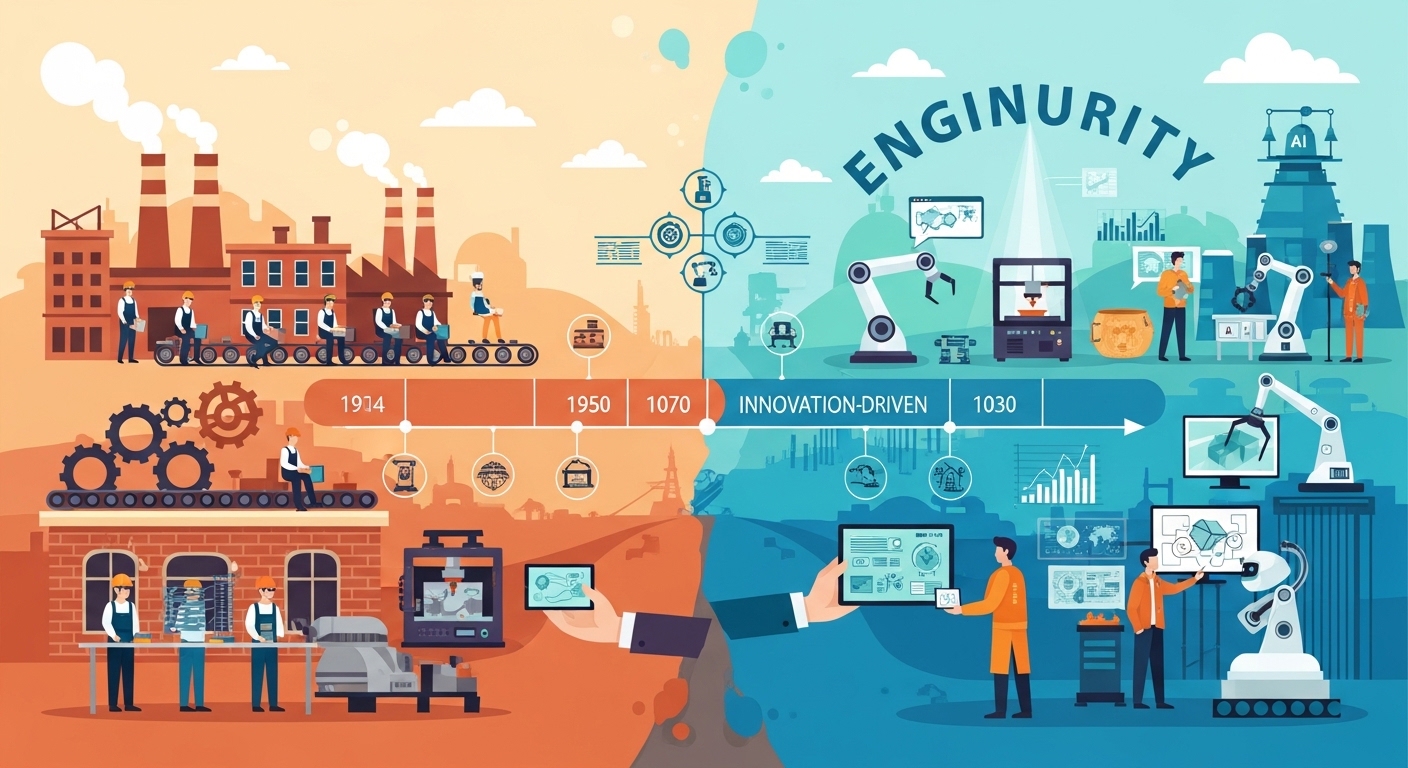
Did you know that by 2033, the U.S. manufacturing sector might need up to 3.8 million new workers, with nearly half of those positions potentially going unfilled due to the ongoing skills gap? In a world racing toward full automation, this statistic highlights a critical question: can machines alone fill the void, or does true progress demand something more, like enginurity?
- Research suggests the manufacturing skills gap could leave 1.9 million jobs unfilled by 2033 if not addressed, emphasizing the need for a balanced approach that values human creativity alongside technology.
- It seems likely that pure automation, while efficient for repetitive tasks, often falls short in handling complex, unpredictable scenarios where human ingenuity shines.
- The evidence leans toward enginurity, a blend of engineering precision and creative problem-solving, as a key to fostering innovation and bridging workforce challenges in technical industries.
- This mindset encourages empathy for both automated systems and human workers, recognizing that collaboration drives sustainable progress without sidelining either side.
Enginurity represents the powerful fusion of structured engineering principles with the spark of human ingenuity. Think of it as the bridge between rigid technical processes and the flexible, adaptive thinking that turns challenges into breakthroughs. In manufacturing and beyond, this concept helps professionals navigate the limitations of automation by injecting creativity into everyday problem-solving.
The manufacturing industry faces a pressing workforce shortage, driven by retiring experts and evolving technology demands. For instance, roles requiring both technical know-how and innovative thinking are hardest to fill. Addressing this through STEM education and vocational pathways can equip the next generation with an enginurity mindset, preparing them for roles where machines support, but humans lead.
Automation excels at speed and consistency, but it struggles with nuance, ethics, and unexpected variables. Human logic brings adaptability, like when engineers devise workarounds during system failures. By prioritizing human-centric design and sustainable engineering, industries can avoid the pitfalls of over-reliance on machines, ensuring ethical automation that benefits everyone.
Developing enginurity starts with curiosity and hands-on experience. Encourage teams to experiment, learn from failures, and collaborate across disciplines. This approach not only closes the skills gap but also cultivates a culture of industrial innovation, where technical roles evolve into creative vocations.
Imagine standing on a bustling factory floor, where robotic arms whir efficiently, assembling parts with pinpoint accuracy. But then, a glitch hits: a material variance the system wasn’t programmed for. The line halts. Now picture an engineer stepping in, quickly assessing the issue, and improvising a solution using a simple tool adjustment that no algorithm could foresee. That’s enginurity in action, the seamless blend of engineering discipline and human cleverness that keeps operations humming.
In today’s technical landscapes, from automotive plants to aerospace facilities, this mindset is becoming essential. As automation advances, it’s tempting to think machines can handle everything. Yet, real-world scenarios show otherwise. Let’s explore what enginurity truly means, why it outshines pure automation, and how it can bridge the widening skills gap in manufacturing and related fields.
Enginurity isn’t just a buzzword; it’s a practical framework for modern problem-solving. At its core, it combines the precision of engineering, like following blueprints and optimizing systems, with the inventive flair of ingenuity, that ability to think outside the box when plans go awry.
Consider how engineers at Airbus use AI assistants to guide technicians through complex repairs. The technology provides data, but it’s the human’s intuitive judgment that ensures the fix is safe and effective. This fusion creates resilient outcomes, especially in high-stakes environments.
Unlike traditional engineering, which might stick strictly to protocols, enginurity encourages flexibility. It’s about applying technical knowledge creatively, much like a chef tweaking a recipe based on available ingredients to still deliver a delicious meal.
The Origins of the Concept
While enginurity draws from age-old ideas of inventiveness, it gains relevance in the era of Industry 5.0. This phase emphasizes human-robot collaboration, where machines handle repetition, and people focus on innovation. Companies like Siemens are leading here, developing copilots that turn engineer ideas into control sequences, speeding up processes without sacrificing human oversight.
Why It Matters Now
With rapid technological shifts, industries need workers who can adapt. Enginurity fosters this, turning potential disruptions into opportunities for growth.
The numbers paint a stark picture. Recent reports indicate that by 2033, U.S. manufacturers could require 3.8 million additional employees, but up to 1.9 million roles might remain vacant due to mismatched skills. This gap stems from several factors, including an aging workforce and the rise of advanced technologies demanding new competencies.
For example, a Deloitte survey found that 80% of manufacturing executives plan to allocate significant budgets to workforce development, recognizing that smart manufacturing requires skilled humans to maximize its potential.
Key Contributors to the Gap
- Retiring baby boomers: Many experienced workers are exiting, taking institutional knowledge with them.
- Evolving tech: Roles now demand proficiency in AI, robotics, and data analysis, areas where traditional training falls short.
- Perception issues: Younger generations often view manufacturing as outdated, overlooking its innovative side.
Workforce Data Overview
Here’s a table summarizing recent workforce trends in manufacturing:
| Aspect | Statistic | Source Implications |
|---|---|---|
| Projected New Workers Needed by 2033 | 3.8 million | Highlights urgency for training programs. |
| Potential Unfilled Jobs | 1.9 million | Risks economic losses if skills aren’t developed. |
| Software Developers Shortage in Advanced Manufacturing | 530,000 by 2033 | Underscores need for STEM education in tech skills. |
| Executives Prioritizing Workforce Development | 97% | Shows industry commitment to upskilling. |
This data reveals a clear call for action: industries must invest in vocational pathways that blend technical training with creative thinking.
Automation is fantastic for efficiency, think robotic arms welding car frames at Ford plants with unerring precision. But it has limits. When unexpected issues arise, like a supply chain hiccup or a design flaw, machines often falter without human intervention.
Take Amazon’s robotics team, which tackled the “impossible” task of robotic stowing in warehouses. While robots now handle much of it, initial challenges required human-like adaptability that pure automation couldn’t provide.
Limitations of Automation
- Lack of context: AI might detect a defect but can’t always understand why it occurred or how to prevent it creatively.
- Ethical dilemmas: Decisions involving sustainability or worker safety need human judgment to balance profits with principles.
- Inflexibility: In dynamic environments, like custom manufacturing, automation struggles with variability.
Where Human Logic Wins
Human ingenuity excels in these gaps. For instance, at a glass bottle manufacturer, engineers used AI agents to boost production by 3%, but it was their design of the system that made it work. This shows how enginurity amplifies automation’s strengths.
Enginurity directly addresses the skills gap by promoting an engineering mindset that values both precision and creativity. In STEM education, programs that incorporate hands-on projects help students develop this.
Companies like GE Aerospace are investing $30 million in training to add 10,000 skilled workers, focusing on blending tech with human skills.
Strategies for Implementation
- Upskilling initiatives: Offer workshops on applying enginurity to complex systems.
- Cultural shifts: Build teams that encourage innovation, debunking the myth that automation replaces jobs entirely.
- Vocational pathways: Partner with schools to create apprenticeships emphasizing practical problem-solving.
How do you cultivate enginurity? Start small. Encourage curiosity by asking “what if” questions during routine tasks.
For example, imagine a team at Bosch using generative AI to speed up inspection systems, but it’s the engineers’ creative data synthesis that cuts development time dramatically.
Steps to Build It
- Embrace failure: View setbacks as learning opportunities, like iterating on prototypes.
- Cross-train: Mix technical and soft skills, such as communication for better team innovation.
- Use analogies: Think of complex systems like ecosystems, where balance is key.
This mindset not only enhances individual roles but also drives sustainable engineering practices.
In manufacturing, enginurity shines in human-centric design. At Schaeffler, AI helps detect defects, but human oversight ensures quality.
Another case: Mobility Worldwide uses limited resources creatively to build accessibility carts, embodying enginurity in resource-constrained settings.
Industry Examples
- Automotive: AI optimizes supply chains at Amazon, but human ingenuity adjusts for real-time disruptions.
- Aerospace: Technicians at Airbus query AI for tools, blending tech with hands-on expertise.
These show why enginurity matters in technical roles, fostering innovation amid automation.
Looking ahead, enginurity will shape the future of work by integrating automation ethics and sustainable practices. As industries adopt Industry 5.0, human ingenuity will ensure technology serves people, not the other way around.
For instance, decentralized supply chains allow quick adaptations to challenges, powered by creative human input.
Emerging Trends
- AI collaboration: Tools augment, rather than replace, human decision-making.
- Workforce evolution: Roles shift toward oversight and innovation, closing the gap through continuous learning.
By building a culture of enginurity, organizations can thrive in this new era.
In wrapping up, remember that enginurity isn’t about resisting automation; it’s about enhancing it with human wisdom. To get started, try these 5 tips:
- Audit your processes: Identify where creativity could improve automated tasks.
- Invest in training: Focus on STEM programs that emphasize problem-solving.
- Foster collaboration: Pair engineers with diverse teams for fresh perspectives.
- Measure impact: Track innovations that stem from human ingenuity.
- Share stories: Discuss successes to inspire your team.
What’s your take on blending engineering with ingenuity? Have you seen enginurity at work in your field? Share in the comments below.
You May Also Like: How to Implement 123safe67 for Maximum Peace of Mind
What exactly is enginurity?
Enginurity is the combination of engineering’s structured approach with ingenuity’s creative problem-solving, essential for modern technical challenges.
How does enginurity help with the manufacturing skills gap?
It equips workers with adaptable skills, blending technical knowledge with innovation to fill roles that automation alone can’t handle.
Why does human logic beat pure automation?
Humans excel at adaptability, ethics, and complex decisions, areas where machines often need guidance to avoid failures.
How can I develop an enginurity mindset?
Start with curiosity, learn from experiments, and apply analogies to simplify complex systems in your daily work.
What role does enginurity play in sustainable engineering?
It promotes human-centric designs that balance efficiency with environmental and ethical considerations for long-term viability.
Is enginurity relevant outside manufacturing?
Absolutely, it applies to any field involving technical problem-solving, like aerospace or software development.
How does enginurity influence the future of work?
It shifts focus to collaborative roles where humans oversee and innovate alongside automated systems.